
Healthy Snacks That Help Beat Afternoon Hunger
62 views
That familiar afternoon slump often shows up just a few hours after lunch. Your stomach starts rumbling, your focus fades, and suddenly the vending machine or a sugary treat seems impossible to resist. While grabbing a quick snack might solve the problem for a few minutes, it often leads to another energy crash before dinner.
The good news is that the right snack can keep hunger under control, provide steady energy, and make it easier to stick with healthy eating habits. Choosing foods that combine protein, fiber, and healthy fats helps you stay satisfied much longer than snacks built around refined carbohydrates or added sugar alone. This guide explains why afternoon hunger happens, what makes a satisfying snack, and which healthy options are worth keeping on hand.
Why Afternoon Hunger Happens
Feeling hungry between lunch and dinner is completely normal. For many people, there's a gap of five or more hours between meals, giving the body time to digest lunch and begin signaling for more energy.
Other factors can make afternoon hunger feel even stronger, including:
Eating a lunch that's low in protein or fiber
Skipping breakfast or lunch
Poor sleep
Stress
High activity levels
Dehydration, which can sometimes feel similar to hunger
Nutrition experts also note that snacks can help bridge long gaps between meals, reducing the temptation to overeat at dinner. The key is choosing foods that provide lasting satisfaction instead of a quick burst of energy.
What Makes a Snack Filling?
Not all snacks are created equal. A cookie or handful of candy may satisfy a craving, but because they're rich in refined carbohydrates and added sugars, they're digested quickly. Blood sugar rises rapidly, then drops, often leaving you hungry again soon afterward.
More satisfying snacks usually include a combination of:
Protein to help you feel full longer
Fiber to slow digestion and support digestive health
Healthy fats for lasting energy and satisfaction
Whole-food carbohydrates that provide steady fuel
This balanced approach supports consistent energy throughout the afternoon rather than dramatic highs and lows.
Best Healthy Snacks for Afternoon Hunger
Greek Yogurt with Fresh Berries
Plain Greek yogurt is naturally high in protein, while berries add fiber, vitamins, and antioxidants.
For extra crunch, sprinkle on a small handful of chopped walnuts or almonds.
Best for: Busy workdays and post-workout afternoons.
Apple Slices with Peanut Butter
This classic combination works because it pairs fiber-rich fruit with healthy fats and protein.
Choose natural peanut butter without added sugar when possible, and keep portions moderate since nut butters are calorie-dense.
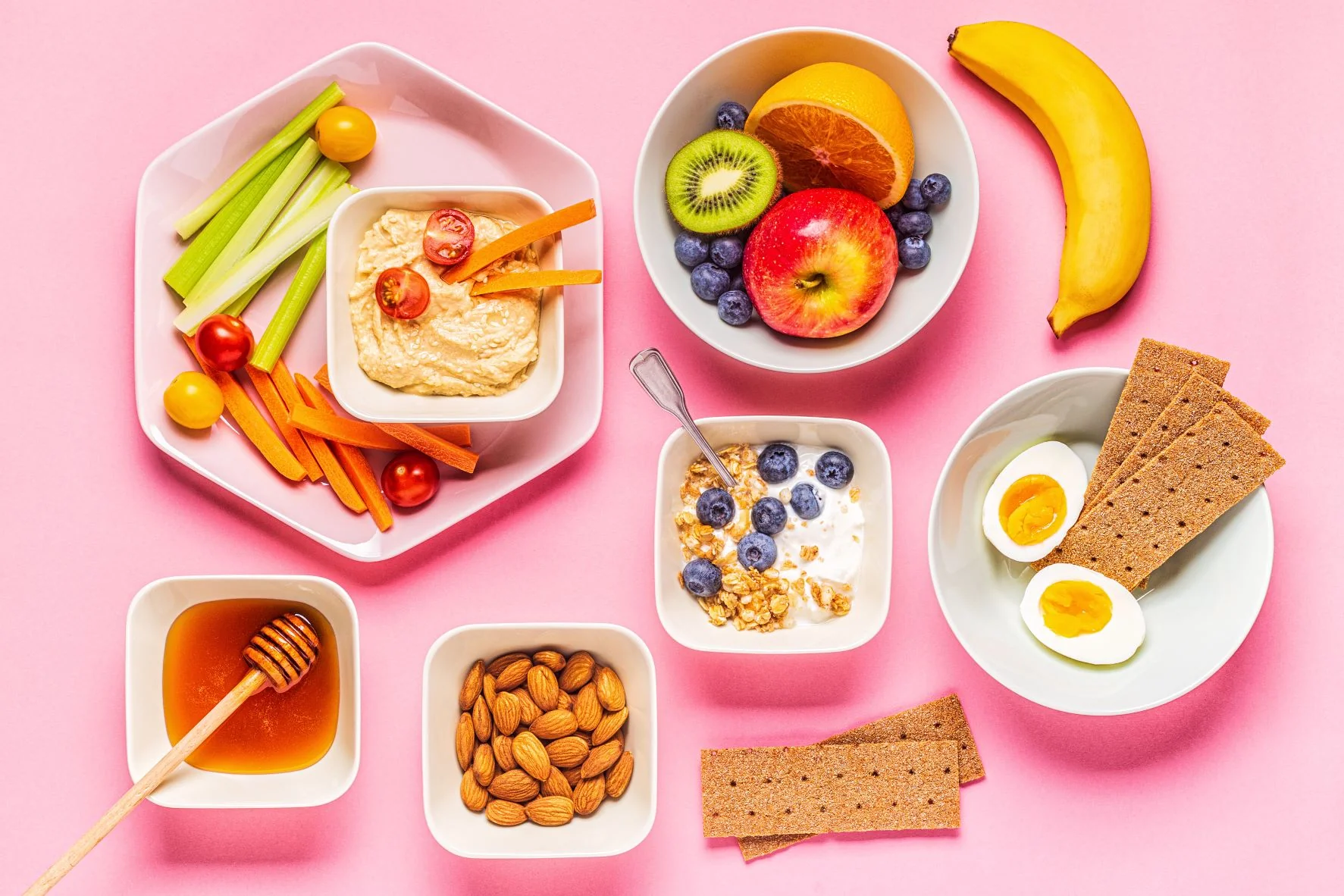
Vegetables with Hummus
Carrot sticks, cucumber slices, celery, bell peppers, and cherry tomatoes pair well with hummus.
This snack delivers fiber, plant-based protein, and healthy fats while adding valuable vitamins and minerals.
Cottage Cheese with Fruit
Cottage cheese provides a generous amount of protein and pairs well with pineapple, peaches, berries, or sliced pears.
It's especially filling if dinner is still several hours away.
Hard-Boiled Eggs
Eggs are portable, affordable, and rich in high-quality protein.
Pair one or two eggs with sliced vegetables or whole-grain crackers for a more balanced snack.
Mixed Nuts
Almonds, pistachios, walnuts, and cashews provide healthy fats, protein, and fiber.
Because nuts are energy-dense, a small handful is usually enough.
Air-Popped Popcorn
Popcorn is a whole grain that's naturally high in fiber when prepared without excessive butter or salt.
Adding a few roasted chickpeas or a small serving of cheese can make it even more satisfying.
Roasted Chickpeas
Crunchy roasted chickpeas offer plant protein, fiber, and minerals.
They're an excellent alternative to chips when you're craving something crispy.
Whole-Grain Crackers with Cheese
Whole grains digest more slowly than refined crackers, while cheese adds protein.
Choose lower-sodium crackers whenever possible.
Edamame
Steamed or dry-roasted edamame is packed with plant protein and fiber.
It's easy to prepare ahead of time and travels well for work or school.
Quick Comparison of Healthy Snack Choices
Snack | Main Benefits | Best For |
|---|---|---|
Greek yogurt and berries | High protein and fiber | Long-lasting fullness |
Apple and peanut butter | Fiber plus healthy fats | Afternoon energy |
Veggies and hummus | Nutrient-rich and filling | Low-calorie snacking |
Cottage cheese and fruit | High protein | Bigger appetites |
Hard-boiled eggs | Complete protein | Portable snacks |
Mixed nuts | Healthy fats and protein | On-the-go eating |
Air-popped popcorn | High-fiber whole grain | Crunchy cravings |
Roasted chickpeas | Plant protein and fiber | Chip alternative |
Whole-grain crackers and cheese | Balanced carbohydrates and protein | Mid-afternoon snack |
Edamame | Protein-rich plant food | Meal bridge |
Smart Snacking Tips That Really Work
Choosing healthy foods is only part of the equation. How and when you snack matters too.
Plan Ahead
Keeping healthy snacks available makes good decisions much easier.
Try preparing snacks in advance:
Portion nuts into small containers.
Wash and slice vegetables ahead of time.
Keep yogurt and fruit in the refrigerator.
Boil several eggs at the beginning of the week.
Watch Portion Sizes
Healthy snacks can still contribute significant calories if portions become too large.
Many nutrition experts suggest aiming for roughly 150 to 250 calories for most between-meal snacks, depending on your individual energy needs and meal schedule.
Drink Water First
Sometimes mild dehydration feels like hunger.
Before reaching for food, drink a glass of water and wait a few minutes to see if your appetite changes.
Eat Without Distractions
If possible, avoid eating while scrolling on your phone or working at your desk.
Mindful eating helps you notice fullness signals and enjoy your food more.
Common Afternoon Snack Mistakes
Even healthy intentions can backfire if your snack isn't balanced.
Some common mistakes include:
Choosing snacks high in added sugar
Eating only refined carbohydrates, such as crackers or pastries
Waiting until you're extremely hungry
Eating directly from large packages
Skipping lunch and relying on snacks later
Treating coffee or energy drinks as meal replacements
These habits often lead to overeating later in the day or experiencing another energy slump.
Building Your Own Balanced Snack
You don't need a recipe every time you're hungry.
A simple formula works well:
Start with a protein source.
Add a fiber-rich carbohydrate.
Include a small amount of healthy fat, if needed.
Here are a few examples:
Greek yogurt + blueberries
Cottage cheese + sliced peaches
Apple + almonds
Whole-grain crackers + cheese
Carrots + hummus
Edamame + orange slices
Pear + walnuts
Hard-boiled egg + cucumber slices
Mixing and matching foods keeps snacks interesting while providing balanced nutrition.
Healthy Store-Bought Snack Ideas
Sometimes convenience matters.
Look for products that contain:
Whole-food ingredients
Little or no added sugar
Good sources of protein or fiber
Limited highly processed ingredients
Good choices include:
Plain Greek yogurt cups
Unsalted mixed nuts
Roasted chickpeas
Individual hummus cups
String cheese
Unsweetened applesauce
Whole-grain crispbread
Dry-roasted edamame
Reading nutrition labels can help you compare options and choose products with less sodium and added sugar.
Frequently Asked Questions
Is it healthy to eat an afternoon snack every day?
Yes. If there's a long gap between lunch and dinner, a balanced snack can help manage hunger, maintain energy, and reduce overeating later. The quality of the snack matters more than simply whether you snack.
Which nutrient helps keep you full the longest?
A combination of protein, fiber, and healthy fats generally provides the greatest feeling of fullness because these nutrients digest more slowly than refined carbohydrates.
Are protein bars a good afternoon snack?
Some are, but many contain added sugars or highly processed ingredients. Check the nutrition label and choose bars with adequate protein, moderate fiber, and limited added sugar.
Can healthy snacks help with weight management?
They can. A satisfying snack may prevent excessive hunger that leads to overeating at dinner. Portion size and overall daily food intake still matter.
What snacks provide quick energy without causing a crash?
Pairing fruit with protein or healthy fat works well. Examples include apples with peanut butter, berries with Greek yogurt, or whole-grain crackers with cheese. These combinations provide steadier energy than sugary snacks alone.
Afternoon hunger doesn't have to derail healthy eating. In fact, it's often your body's natural reminder that it needs more fuel between meals. Instead of reaching for snacks that offer only a short-lived energy boost, choose combinations of protein, fiber, healthy fats, and whole-food carbohydrates that keep you satisfied until dinner.
Keeping a few nutritious options ready at home, work, or on the go makes healthy choices much easier. Small changes—like swapping chips for roasted chickpeas or pairing fruit with yogurt—can leave you feeling more energized, better focused, and less tempted by less nutritious foods later in the day.
healthy snacks
protein snacks
nutritious food
easy snacks
meal ideas
Found this helpful? Share it!