
Seaweed Benefits, Types & Cooking Ideas for Beginners
346 views
You've probably walked past packets of dried seaweed dozens of times. Then you finally buy one, open it, and wonder... now what?
That hesitation is common. Seaweed doesn't behave like spinach, lettuce, or cabbage. Some varieties become silky within seconds of soaking. Others stay pleasantly crisp. A few practically dissolve into soup if you leave them too long. The first mistake many beginners make isn't choosing the wrong type—it's treating every seaweed exactly the same.
Once you understand the basics, though, seaweed becomes one of the easiest pantry ingredients to keep around. It stores for months, adds deep savory flavor without much effort, and brings nutrients that are surprisingly difficult to get from many everyday vegetables.
Why seaweed has been a kitchen staple for centuries
Seaweed isn't a trendy "superfood." Coastal communities across Japan, Korea, China, Ireland, Wales, Iceland, Indonesia, and parts of South America have relied on edible marine algae for generations.
Scientists classify edible seaweeds into three broad groups:
Category | Common Examples | Typical Color | Best Uses |
|---|---|---|---|
Brown algae | Kombu, Wakame | Olive to dark brown | Soups, broths, salads |
Red algae | Nori, Dulse | Purple to deep red | Sushi, snacks, seasoning |
Green algae | Sea lettuce, Ulva | Bright green | Salads, garnishes |
The Food and Agriculture Organization (FAO) estimates that global seaweed production exceeds 35 million tonnes annually, with most cultivated rather than harvested from wild coastlines. Much of that production supplies food markets throughout Asia, while demand continues growing across Europe and North America thanks to interest in plant-forward diets and sustainable ingredients.
Nutrition packed into surprisingly small portions
A single sheet of dried nori weighs only a few grams. Doesn't seem like much.
Yet that little sheet contains protein, fiber, minerals, antioxidants, and several vitamins. Different species vary considerably, so nutritional labels often look quite different from one package to another.
Many edible seaweeds provide:
Dietary fiber
Iodine
Iron
Calcium
Magnesium
Potassium
Vitamin K
Folate
Small amounts of omega-3 fatty acids
Brown seaweeds such as kombu generally contain substantially more iodine than nori. That's helpful—but also a reason not to overdo it.
Researchers consistently recommend moderation because iodine levels vary dramatically depending on species, growing location, and processing methods. A bowl of miso soup with a little wakame isn't the same as eating large handfuls of dried kelp every day.
The five seaweeds beginners should actually buy
Supermarkets often stock dozens of unfamiliar packages covered in Japanese or Korean text. That can feel intimidating. It doesn't need to.
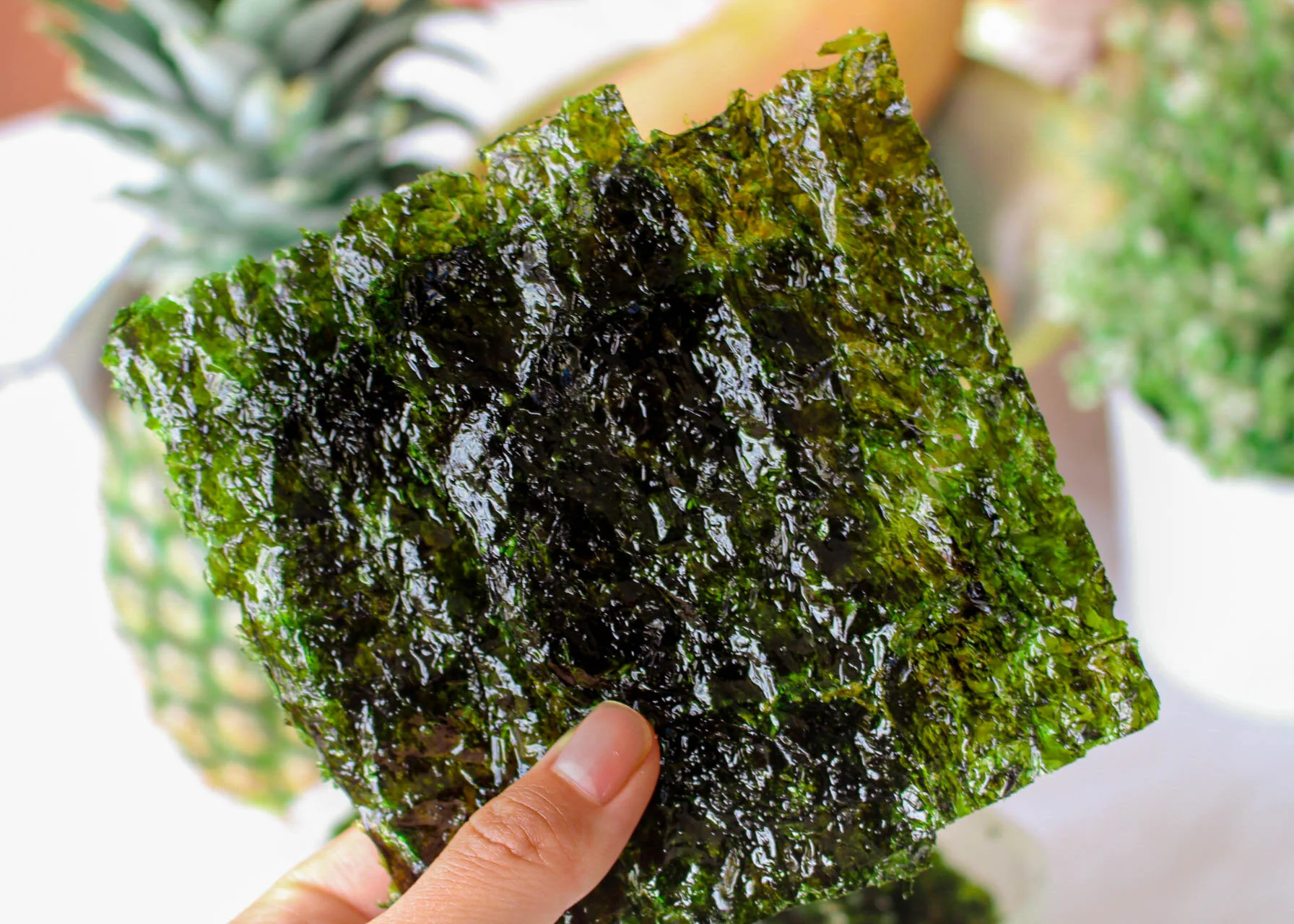
Nori: the easiest starting point
Most people have already eaten nori without realizing it.
It's the thin sheet wrapped around sushi rolls.
Besides sushi, try:
Crumbling it over rice
Mixing into popcorn
Sprinkling over ramen
Crushing into scrambled eggs
Once opened, keep the package tightly sealed. Humidity makes nori lose its crisp texture surprisingly fast.
Wakame: soft, silky, forgiving
Dried wakame expands dramatically after soaking. Really dramatically.
A tablespoon of dried pieces can become an entire handful.
Five minutes in cool water is usually enough. Beginners often leave it soaking for half an hour, only to discover they've made a slippery mass that's difficult to use.
Wakame works beautifully in:
Miso soup
Cucumber salads
Rice bowls
Noodle dishes
Kombu: the broth specialist
Kombu isn't usually eaten in large amounts by itself.
Instead, it's prized for building flavor.
The secret lies in naturally occurring glutamates—the compounds responsible for umami. Japanese cooking relies heavily on kombu to prepare dashi, a foundational stock.
Here's one practical lesson many home cooks discover through trial and error: don't boil kombu aggressively. Simmering gently or removing it before the water reaches a rolling boil produces a cleaner broth with less bitterness.
Dulse: surprisingly snackable
Dulse has a mild salty flavor with subtle smoky notes.
Some people simply eat dried pieces straight from the bag. Others toast it lightly in a skillet, where it develops an aroma that reminds many people of bacon, although the flavor remains distinctly its own.
Sea lettuce
Bright green and delicate.
Sea lettuce works well fresh where available, although dried versions are becoming easier to find. It pairs nicely with citrus dressings and lighter seafood dishes.
Health benefits backed by research
Seaweed isn't magic. No single food is.
Still, decades of nutrition research point toward several potential advantages when it's included as part of a balanced diet.
Rich source of iodine
Your thyroid depends on iodine to produce hormones regulating metabolism.
Many inland diets naturally contain less iodine than coastal diets. Seaweed can help fill that gap, although balance matters because excessive iodine intake can also affect thyroid function.
Naturally high in soluble fiber
Some seaweeds contain alginates, carrageenan, agar, and other soluble fibers.
These compounds may:
Support digestive health
Slow digestion slightly
Help people feel fuller after meals
Feed beneficial gut bacteria
Scientists continue studying these effects, particularly regarding gut microbiome diversity.
Antioxidant compounds
Brown seaweeds contain compounds like fucoxanthin.
Red varieties provide different polyphenols and pigments.
Research continues exploring their antioxidant activity, though many findings remain in laboratory or animal studies rather than large human clinical trials.
Buying seaweed without wasting money
Price varies more than most people expect.
Small supermarket snack packs might cost USD $2–5.
Larger 100-gram bags from Asian grocery stores often range between USD $8–18 and usually offer much better value. Organic or specialty harvested varieties can exceed USD $25 per package.
Read ingredient labels carefully.
Some flavored roasted seaweed snacks include:
Vegetable oils
Added sugar
Artificial flavorings
High sodium levels
MSG or yeast extract
None of those are necessarily bad, but they change both nutrition and flavor.
Plain dried seaweed gives you far more flexibility.
Cooking ideas that actually work
Forget complicated recipes for now.
Start small.
Quick rice bowl upgrade
Warm rice.
Add shredded nori, sliced avocado, sesame seeds, soy sauce, and a fried egg.
Dinner takes about ten minutes.
Simple wakame salad
Soak wakame for five minutes and squeeze out excess water.
Toss with rice vinegar, sesame oil, cucumber, and toasted sesame seeds.
That's it.
Homemade dashi
Place one piece of kombu into cool water.
Heat slowly for about 20–30 minutes.
Remove the kombu before the water boils, then add bonito flakes if making traditional Japanese dashi, or use the broth as a vegetarian soup base.
Blend into seasoning
Pulse toasted nori with:
Sesame seeds
Sea salt
Dried mushrooms
Chili flakes
Store it in a small airtight jar and sprinkle over vegetables or roasted potatoes.
Storage mistakes beginners make
Moisture is the enemy.
Most dried seaweed already has very little water content. Once exposed to humid kitchen air, it softens quickly.
I've seen perfectly crisp nori become chewy after sitting open while dinner was cooking.
A few habits make a noticeable difference:
Reseal bags immediately.
Store in a cool, dry cupboard.
Use airtight containers after opening.
Keep the silica packet inside unless the manufacturer says otherwise.
Avoid refrigeration unless instructed on the packaging, since condensation can introduce unwanted moisture.
Properly stored dried seaweed often remains in good condition for many months, though flavor gradually fades over time.
Sustainability deserves a closer look
Seaweed farming attracts growing attention because it generally requires no freshwater irrigation, no agricultural land, and little or no fertilizer.
Unlike many terrestrial crops, cultivated seaweed absorbs dissolved nutrients directly from seawater.
Environmental researchers are investigating additional benefits, including habitat creation and carbon cycling. At the same time, responsible harvesting remains essential. Wild populations can suffer if collected faster than they regenerate, making certified or responsibly farmed products a better long-term choice.
Frequently Asked Questions
Is seaweed safe to eat every day?
For most healthy adults, moderate amounts are generally considered safe. Variety matters because iodine content differs significantly between species, especially kelp and kombu.
Does dried seaweed expire?
Yes. Although dried seaweed has a long shelf life, quality slowly declines. Always check the manufacturer's expiration date and discard products showing mold, unusual odors, or moisture damage.
Can vegans get enough protein from seaweed?
Seaweed contains protein, but not enough to serve as a primary protein source. It works best alongside legumes, tofu, grains, nuts, and other plant proteins.
Why does seaweed taste different from one package to another?
Growing region, water temperature, harvesting season, processing method, and roasting all influence flavor. Korean roasted nori often tastes different from Japanese sushi nori, even though both come from similar species.
Which seaweed is best for complete beginners?
Nori is usually the easiest introduction because it's familiar, inexpensive, widely available, and doesn't require soaking. Wakame is an excellent second choice once you're comfortable preparing dried seaweed.
Your first seaweed recipe doesn't need to be ambitious
Skip the elaborate sushi rolls for now.
Buy one pack of plain nori and one small bag of dried wakame. Learn how each behaves in the kitchen. Notice how quickly one crisps over warm rice while the other expands dramatically after a short soak. That small bit of hands-on experience teaches more than reading ten recipes ever will, and it gives you a foundation for exploring everything from homemade dashi to hearty noodle bowls with far more confidence.
seaweed benefits
types of seaweed
cooking seaweed
seaweed for beginners
edible seaweed
healthy seaweed recipes
nori benefits
wakame seaweed
kelp recipes
seaweed nutrition
Found this helpful? Share it!