
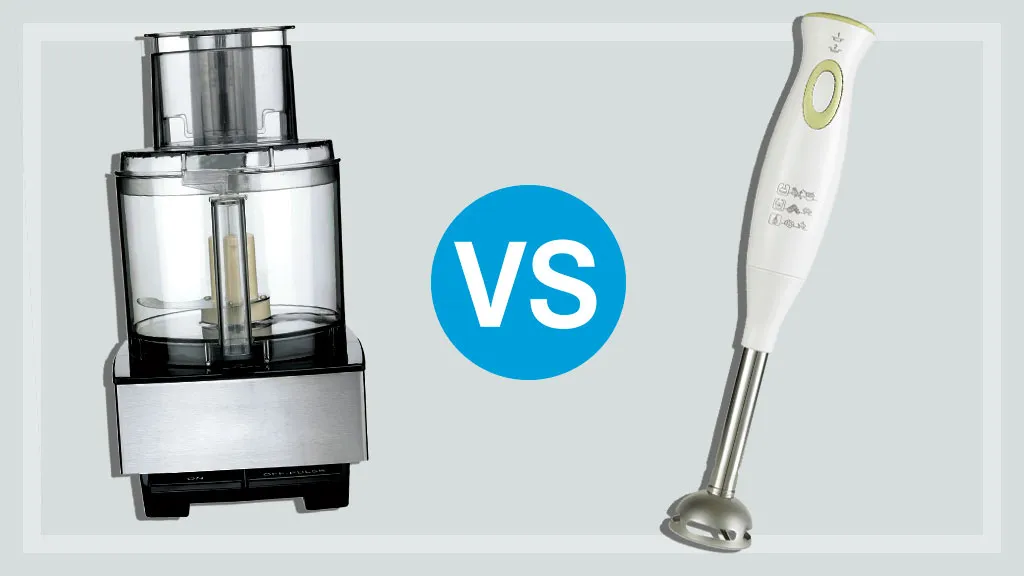
Blender vs Food Processor: Which One Do You Really Need?
326 views
Standing in a kitchen appliance aisle can feel oddly expensive.
One machine promises silky smoothies. Another claims it can chop, slice, knead, shred, and puree. The boxes look convincing. The marketing sounds even better. Then you get home, buy the wrong appliance, and discover your blender struggles with pizza dough while your food processor turns a smoothie into chunky disappointment.
I've made that mistake.
After years of testing different kitchen appliances—from compact personal blenders to 14-cup food processors—the biggest lesson wasn't that one machine is better. It's that they're built for completely different jobs.
Let's break down what actually matters before you spend your money.
They May Look Similar. They're Not.
A blender and a food processor both use spinning blades powered by an electric motor. That's where the similarities mostly end.
The engineering is surprisingly different.
A standard countertop blender uses a tall, narrow jar that creates a vortex. Liquids circulate downward toward the blades, allowing ingredients to blend continuously. Models like the Vitamix 5200, Blendtec Total Classic, and Ninja Professional Plus rely on this vortex effect to produce smooth textures.
Food processors work another way.
Instead of pulling food into a vortex, they use a wide work bowl with interchangeable discs and an S-shaped blade. Food remains inside the bowl while the blade chops repeatedly. That's why vegetables stay chopped instead of turning into soup.
Simple difference.
Big consequences.
What a Blender Actually Excels At
If there's enough liquid, a quality blender becomes incredibly efficient.
Smoothies are the obvious example, but that's only part of the story.
A high-powered blender with a motor between 1,000 and 1,500 watts can easily handle:
Protein shakes
Frozen fruit smoothies
Creamy soups
Nut milk
Pancake batter
Frozen cocktails
Pureed sauces
Premium machines can even make hot soup.
That isn't because they contain a heating element. Instead, prolonged blending—often six to eight minutes—creates friction that raises the temperature enough to heat the ingredients.
Pretty clever.
The catch?
Blenders don't like dry mixtures.
Anyone who's tried making hummus with too little oil has probably watched ingredients climb the sides of the jar while the blades spin uselessly underneath. You'll stop the machine every thirty seconds just to scrape everything back down.
It gets old fast.
Why Food Processors Feel Like Kitchen Workhorses
Food processors were designed around prep work.
Not drinks.
A common 10- to 14-cup processor usually includes several attachments:
Attachment | Primary Purpose |
|---|---|
S-blade | Chopping, mixing, pureeing |
Slicing disc | Uniform vegetable slices |
Shredding disc | Cheese, carrots, cabbage |
Dough blade | Bread and pizza dough |
That flexibility changes how quickly meals come together.
Need five onions diced?
Done in under a minute.
Want shredded mozzarella for homemade pizza?
Almost effortless.
Preparing coleslaw for ten people?
No knife skills required.
KitchenAid, Cuisinart, Breville, and Magimix all offer processors capable of handling surprisingly heavy workloads without overheating.
Here's Where People Usually Get Frustrated
Marketing photos rarely show the annoying parts.
Cleaning, for example.
Blenders generally have fewer components:
Jar
Lid
Blade assembly (sometimes removable)
Many can almost clean themselves. Add warm water, a drop of dish soap, blend for thirty seconds, rinse.
Food processors aren't quite that simple.
A typical setup includes the bowl, lid, feed tube, pusher, blade, spindle, multiple discs, and storage case. After shredding cheese, tiny bits often lodge underneath the slicing disc or inside the lid seal.
Not impossible to clean.
Just...more pieces.
Power Isn't Everything
People often compare wattage.
That's only part of the equation.
Blade geometry, motor torque, and speed control matter just as much.
A 1,200-watt Vitamix doesn't outperform cheaper blenders solely because of power. The blade design, cooling system, hardened stainless steel construction, and motor durability all contribute to consistent results.
Similarly, many food processors operate around 600–1,000 watts, yet comfortably knead bread dough because they produce higher torque at lower rotational speeds.
Different jobs.
Different engineering priorities.
Texture Changes Everything
Imagine making salsa.
A blender tends to pull tomatoes, onions, cilantro, and peppers into a fast-moving vortex. Blend for just a few extra seconds and you've created gazpacho.
A food processor behaves differently.
Each pulse chops without fully liquefying the ingredients.
The result feels fresher.
Chunkier.
Closer to restaurant salsa.
The same principle applies to pesto, pie crust, biscuit dough, and chopped vegetables.
Ice? Frozen Fruit? Tough Ingredients?
This is where premium blenders earn their reputation.
Machines designed for crushing ice often reach blade speeds exceeding 20,000 RPM, depending on the selected speed and load. Combined with hardened stainless steel blades, they pulverize frozen fruit into smooth textures surprisingly quickly.
Food processors can crush small amounts of ice.
They're simply not optimized for it.
Repeatedly processing hard frozen ingredients can dull blades faster or place unnecessary strain on the motor.
Real Kitchen Scenarios
Buying appliances becomes easier once you stop thinking about recipes and start thinking about habits.
Scenario 1: Morning Smoothie Routine
A blender wins immediately.
Frozen berries, spinach, protein powder, yogurt, oats, almond milk—everything blends smoothly in under two minutes.
A food processor?
Messier. Less efficient.
Scenario 2: Weekly Meal Prep
Now the tables turn.
Chopping peppers, onions, carrots, celery, cabbage, broccoli, cucumbers, and cheese for several days of meals becomes dramatically faster with a food processor.
Knife fatigue is real.
Scenario 3: Homemade Bread
Many people assume a stand mixer is mandatory.
Not always.
A quality food processor fitted with its dough blade can knead pizza or bread dough in just a couple of minutes. The rapid blade action develops gluten efficiently without lengthy hand kneading.
Blenders simply aren't built for that task.
Price Doesn't Always Tell the Whole Story
There's a wide range.
Here's a realistic snapshot of current market pricing.
Category | Typical Price |
|---|---|
Personal blender | $30–$80 |
Mid-range countertop blender | $80–$180 |
Premium blender | $350–$650 |
Small food processor | $40–$90 |
Mid-size food processor | $100–$220 |
Premium food processor | $300–$700 |
Higher prices usually buy:
Longer warranties
Stronger motors
Better blade materials
Quieter operation
More durable gear systems
Larger capacities
A machine that's used weekly for ten years often ends up costing less per use than replacing a cheaper model every couple of years.
Can One Machine Replace the Other?
Sometimes.
Rarely completely.
High-end blenders can make nut butter, grind grains, and even mix certain doughs using specialized tamper tools.
Food processors can puree soups, make hummus, and blend sauces with enough added liquid.
Neither feels truly comfortable doing the other's primary job.
Trying to shred cabbage in a blender usually ends badly.
Making frozen margaritas in a food processor isn't much better.
Which One Should You Buy?
Here's the simplest decision guide.
You Mostly Make... | Best Choice |
|---|---|
Smoothies | Blender |
Soups | Blender |
Frozen drinks | Blender |
Protein shakes | Blender |
Chopped vegetables | Food processor |
Pie crust | Food processor |
Bread dough | Food processor |
Shredded cheese | Food processor |
Large meal prep | Food processor |
Still unsure?
Ask yourself one question.
What do you prepare three or four times every week?
That's almost always the appliance worth buying first.
A Few Small Things Nobody Mentions
Noise varies wildly.
Some high-speed blenders easily exceed 90 decibels, roughly comparable to a lawn mower heard from several feet away. Premium commercial models often include sound enclosures for that reason.
Storage matters too.
A tall blender may not fit beneath upper kitchen cabinets. Large food processors demand more horizontal cabinet space because of their wider bowls and multiple accessories.
Tiny annoyances, admittedly.
They become daily annoyances if you ignore them.
Frequently Asked Questions
Can a blender chop vegetables?
It can, but consistency is difficult. Soft vegetables often become unevenly chopped or overprocessed into a puree, especially if blended for too long.
Is a food processor better for making hummus?
Usually yes. It produces thicker, creamier hummus with less scraping than many standard blenders, especially when processing chickpeas before adding liquid ingredients gradually.
Which appliance is easier to clean?
Most blenders are quicker to clean because they have fewer removable parts. Food processors require washing several components after each use.
Do I need an expensive blender for smoothies?
Not necessarily. If you're blending mostly fresh fruit and yogurt, many mid-range models perform well. Frequent use with frozen fruit, ice, nuts, or fibrous greens benefits from a more powerful motor.
Should beginners buy both?
Only if you'll genuinely use both. Most households are happier starting with the appliance that matches their weekly cooking habits and adding the second later if their needs expand.
The Smartest Purchase Starts With Your Routine
Forget the flashy marketing photos and oversized feature lists for a moment. Open your refrigerator instead. Look at what you actually cook every week.
If breakfast usually involves fruit, yogurt, ice, and protein powder, a blender will earn its place on the counter almost immediately. If dinner starts with chopping onions, shredding cheese, slicing vegetables, or mixing dough, a food processor saves far more time than most people expect.
Buy the appliance that solves today's kitchen frustrations—not the one you might need someday. That's the choice you'll appreciate every single week.
blender vs food processor
blender or food processor
kitchen appliance comparison
best kitchen tools
blender uses
food processor uses
cooking appliances
smoothie blender
food prep machine
kitchen gadget guide
Found this helpful? Share it!