
Ube Benefits, Uses & Recipes – Complete Guide (2026)
327 views
You've probably seen bright purple desserts all over social media. Ice cream, pancakes, cheesecakes, even coffee. Many people assume it's made with purple sweet potato. It usually isn't.
That's where the confusion starts.
Ube and purple sweet potato look similar after cooking, yet they taste different, behave differently in recipes, and even belong to different plant species. I've watched plenty of first-time home cooks substitute one for the other, only to wonder why their cake turned out dense or why the flavor seemed oddly bland. It happens more often than you'd think.
If you're curious about ube—or planning to cook with it—this guide covers what it is, its nutritional value, practical benefits, common uses, buying tips, and reliable recipes that actually work.
What Exactly Is Ube?
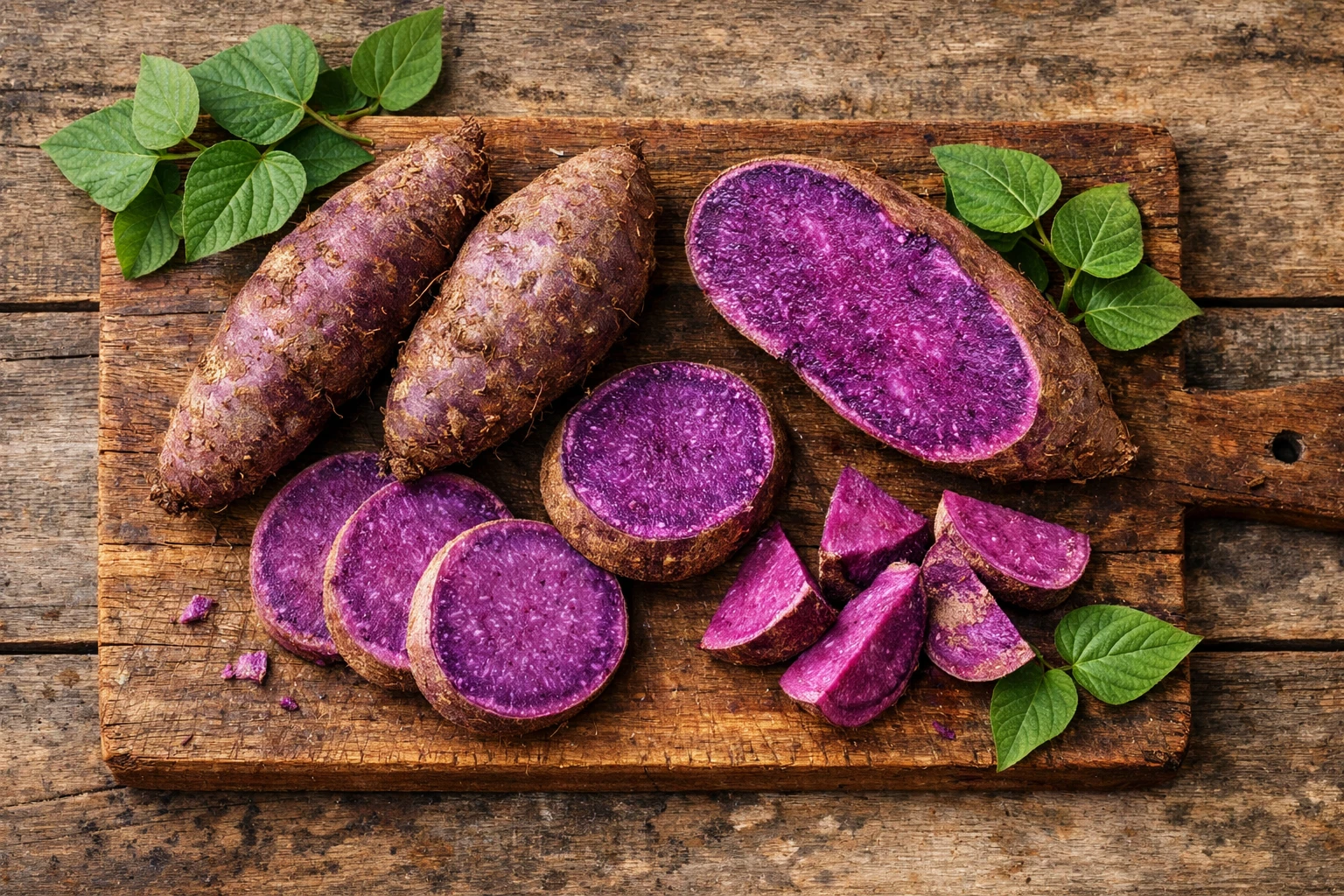
Ube (Dioscorea alata) is a species of yam that originated in Southeast Asia and has become especially important in Filipino cuisine. It grows underground as a tuber with rough brown skin and vibrant purple flesh.
Despite the color, it isn't the same as:
Ingredient | Plant Type | Flavor | Common Uses |
|---|---|---|---|
Ube | Yam | Mildly sweet, vanilla-like, nutty | Cakes, desserts, jam |
Purple sweet potato | Sweet potato | Earthier, less aromatic | Baking, roasting |
Taro | Root vegetable | Mild, starchy | Bubble tea, savory dishes |
Fresh ube has a subtle sweetness that many people describe as a blend of vanilla, pistachio, and coconut rather than an overpowering sugary flavor.
That aroma matters.
Most of the signature "ube taste" comes from natural aromatic compounds instead of intense sweetness.
Why Ube Has Become So Popular
The rise wasn't accidental.
During the last several years, Filipino desserts gained broader international recognition through bakeries, specialty cafés, food creators, and grocery chains carrying frozen ube products and spreads. Today, it's common to find ube ice cream, cookies, doughnuts, bubble tea, and pastries outside the Philippines.
Social media certainly accelerated its popularity, but the flavor has kept people coming back.
Unlike ingredients that are mostly about appearance, ube offers both striking color and distinctive taste.
Nutritional Profile
Fresh ube is primarily a carbohydrate-rich root crop while also providing dietary fiber and several essential micronutrients.
A typical 100-gram serving contains approximately:
Nutrient | Amount (Approx.) |
|---|---|
Calories | 115–120 kcal |
Carbohydrates | 27–29 g |
Fiber | 3–4 g |
Protein | 1–2 g |
Fat | Less than 0.2 g |
Potassium | ~500 mg |
Vitamin C | Small amount |
Manganese | Moderate amount |
Values vary depending on growing conditions and cooking method.
Processed products such as ube halaya, ice cream, syrups, cake mixes, and flavored powders often contain considerably more added sugar and fat than fresh cooked ube.
Health Benefits Worth Knowing
Rich in Antioxidants
That vivid purple color isn't just attractive.
Ube contains anthocyanins, the same family of antioxidant pigments found in blueberries, blackberries, purple corn, and red cabbage. Laboratory research suggests anthocyanins help reduce oxidative stress by neutralizing unstable free radicals.
Scientists continue studying their broader role in long-term health, although nutrition experts generally recommend consuming a variety of naturally colorful fruits and vegetables rather than relying on a single "superfood."
Provides Lasting Energy
Because it's a starchy tuber, ube serves as an excellent energy source.
The carbohydrates digest more gradually than refined sugar, especially when paired with protein or healthy fats, making it useful before physically demanding work or exercise.
Simple. Reliable.
Supports Digestive Health
Fiber helps maintain regular digestion while also contributing to fullness after meals.
Fresh boiled ube contains noticeably more fiber than highly processed desserts made from ube flavoring or extracts.
Contains Potassium
Potassium plays a role in muscle function, nerve signaling, and maintaining normal fluid balance.
Many people don't consume enough potassium-rich foods, making vegetables like ube useful additions to a balanced diet.
Naturally Low in Fat
Fresh ube contains very little fat.
That benefit often disappears once recipes call for condensed milk, butter, coconut cream, or heavy cream, so the finished dish depends far more on preparation than on the ingredient itself.
Fresh Ube vs Frozen vs Powder
Buying ube isn't always straightforward.
Outside Southeast Asia, you'll usually find one of four forms.
Fresh Ube
Pros:
Best flavor
Excellent texture
Highest culinary flexibility
Cons:
Harder to locate
Requires peeling and lengthy cooking
Can spoil relatively quickly
Frozen Grated Ube
A favorite among experienced home bakers.
Frozen grated ube saves significant preparation time while preserving much of the original flavor. Asian supermarkets often stock it year-round.
Ube Powder
Convenient for baking.
Powder stores well and works nicely in breads, cookies, pancakes, and drink mixes, although it lacks some of the creaminess of fresh yam.
Most brands recommend rehydrating it with warm water before use.
Ube Extract
This isn't made for nutrition.
Its primary purpose is flavor and color. Many commercial extracts combine natural and artificial flavor compounds with food coloring, so they're best viewed as baking ingredients rather than substitutes for whole ube.
Cooking Ube Without Frustration
Fresh ube takes patience.
First, scrub away soil thoroughly because the rough skin traps dirt surprisingly well.
Next:
Boil or steam until fork tender—usually 35 to 60 minutes depending on size.
Peel while still warm, then mash or grate for recipes.
Pressure cookers shorten cooking considerably. Electric multicookers with pressure settings, such as modern countertop models, often reduce total cooking time to around 20–30 minutes for medium-sized tubers, though exact timing varies with thickness.
One lesson I've learned: don't peel raw ube unless you enjoy wrestling with an extremely stubborn vegetable. Cooking first makes the job dramatically easier.
Popular Ways to Use Ube
Ube's versatility surprises many first-time cooks.
Classic Ube Halaya
This traditional Filipino jam combines mashed ube with condensed milk, evaporated milk, butter, and sugar, slowly stirred until thick and glossy.
Patience pays off.
The constant stirring develops a smoother texture and deeper flavor.
Baking
Ube works beautifully in:
Cheesecake
Cupcakes
Swiss rolls
Muffins
Bread
Cinnamon rolls
Cookies
Brownies
Its natural color often survives baking remarkably well, although extended high temperatures may dull the vibrant purple slightly.
Frozen Desserts
Ice cream remains one of the most recognizable ube treats worldwide.
Gelato, frozen yogurt, milkshakes, and popsicles also highlight its creamy, vanilla-like flavor.
Breakfast Recipes
Less expected—but delicious.
Try adding mashed ube to:
Pancake batter
Waffles
Overnight oats
Smoothie bowls
French toast filling
Three Easy Recipes Anyone Can Make
1. Quick Ube Latte
Ingredients
2 tablespoons mashed cooked ube
1 cup milk
1 teaspoon sugar (optional)
Espresso or strong coffee
Warm the milk, whisk in the mashed ube until smooth, pour over espresso, and sweeten to taste.
2. Simple Ube Pancakes
Mix your favorite pancake batter with:
½ cup mashed ube
1 teaspoon ube extract (optional)
Extra milk if the batter becomes too thick
Cook normally on a lightly greased skillet.
The pancakes develop a soft purple color without tasting artificial.
3. No-Bake Ube Cheesecake Cups
Combine cream cheese, whipped cream, sugar, and mashed ube.
Layer over crushed graham crackers in serving glasses.
Refrigerate for at least four hours before serving.
No oven required.
Buying Tips That Save Money
Fresh ube should feel heavy for its size with firm skin and no soft spots.
If purchasing frozen grated ube:
Check for excessive ice crystals, which may indicate repeated thawing.
Read ingredient labels carefully. Some products contain only ube, while others include added sugar or artificial coloring.
Keep frozen until ready to use.
Specialty Asian grocery stores generally offer the widest selection. Many supermarkets also carry frozen ube products in international food sections, while online retailers increasingly stock powders, extracts, and baking ingredients.
Storage Advice
Fresh whole ube stores best in a cool, dark, well-ventilated place rather than the refrigerator.
Once cooked:
Refrigerate for up to five days in an airtight container.
Freeze mashed portions for roughly three months.
Freeze recipe-sized portions to avoid repeated thawing.
That last step saves plenty of hassle later.
Frequently Asked Questions
Is ube healthier than sweet potato?
Both are nutritious root vegetables. Sweet potatoes generally provide more vitamin A, while ube supplies anthocyanin antioxidants that give it its distinctive purple color. Neither is universally healthier—they simply offer different nutritional strengths.
Can people with diabetes eat ube?
Fresh ube can fit into many balanced eating plans when consumed in appropriate portions. However, desserts like ube halaya, cakes, and ice cream often contain substantial added sugar. Individuals managing diabetes should follow advice from their healthcare professional regarding carbohydrate intake.
Does ube taste like vanilla?
Not exactly. Most people describe it as mildly sweet with hints of vanilla, coconut, and pistachio rather than pure vanilla.
Can I substitute purple sweet potato for ube?
Yes, but expect differences in flavor, aroma, moisture, and texture. Purple sweet potato usually produces a less fragrant finished dish.
Why is some ube extremely bright purple?
Fresh ube varies naturally in color from lavender to deep violet. Commercial desserts may appear much brighter because recipes include concentrated ube extract or approved food coloring to create a consistent appearance.
Bring Ube Into Your Kitchen
Start simple instead of chasing elaborate bakery recipes on day one. A batch of mashed cooked ube can become pancakes on Saturday morning, a latte in the afternoon, and cheesecake cups for dessert the next day. Once you're comfortable working with its texture and subtle sweetness, homemade breads, ice cream, and traditional ube halaya become much less intimidating—and far more rewarding than relying on artificial flavoring alone.
ube benefits
ube recipes
ube uses
what is ube
purple yam benefits
ube dessert recipes
ube nutrition
how to cook ube
Filipino ube recipes
ube guide 2026
Found this helpful? Share it!