
From Sauté to Sous Vide: Essential Techniques Every Cook Should Know
474 views
A recipe looked easy. Then the onions burned, the chicken dried out, and somehow the sauce split just before dinner hit the table.
That happens more often than people admit.
The problem usually isn't the recipe. It's technique. Two people can follow the same ingredient list, use the same pan, and end up with completely different meals because one understands heat, timing, and moisture while the other simply follows instructions.
Learning a handful of core cooking methods changes everything. Instead of memorizing recipes, you begin understanding why food behaves the way it does. That's the point where cooking becomes flexible instead of stressful.
Master heat before chasing recipes
Heat is your real ingredient.
Most home kitchens rely on gas burners, electric coils, induction cooktops, or ceramic glass surfaces. Each transfers energy differently, and that changes cooking behavior more than many people realize.
An induction hob, for example, heats cookware directly through electromagnetic induction rather than heating the burner itself. Water often boils noticeably faster, while temperature adjustments happen almost instantly. Gas responds quickly too, although plenty of heat escapes around the sides of the pan. Traditional electric coils are slower to react, meaning a pan can stay dangerously hot even after you've lowered the setting.
That delay catches people all the time.
A stainless-steel skillet that feels "warm enough" may actually continue climbing another 20–40°C after the burner is reduced.
Professional kitchens constantly adjust pans instead of leaving them planted over heat. Sliding a pan partially off the burner for fifteen seconds can prevent garlic from turning bitter. It's a tiny habit with surprisingly big results.
Sauté: Fast cooking with purpose
Sautéing looks simple.
It isn't.
The word comes from the French sauter, meaning "to jump," referring to food bouncing around the pan during cooking.
The goal isn't merely browning food. You're building flavor through the Maillard reaction, which generally accelerates once the food's surface exceeds roughly 140°C (285°F) under relatively dry conditions. This reaction creates hundreds of new flavor compounds that simply don't develop during boiling.
A few practical lessons learned the hard way:
Dry meat with paper towels before it hits the pan.
Leave space between ingredients instead of overcrowding.
Wait before stirring constantly.
Use oils with appropriate smoke points for high-heat cooking.
Extra-virgin olive oil has wonderful flavor, but its smoke point is generally lower than refined avocado oil or refined peanut oil. That doesn't make it bad—it simply makes it less forgiving during aggressive searing.
Sometimes the loud sizzling suddenly goes quiet.
That's your warning sign. Moisture is collecting in the pan, and you've shifted from sautéing to steaming.
Searing isn't about sealing in juices
This myth refuses to disappear.
Searing does not lock moisture inside meat. Food scientists, including researchers writing in texts like On Food and Cooking by Harold McGee, have repeatedly demonstrated that moisture still escapes during cooking.
So why sear?
Flavor.
That deeply browned crust develops complex aromas impossible to create with gentle cooking alone. Restaurants often combine techniques by searing first, then finishing meat in the oven or with lower heat to achieve even doneness.
Thicker steaks especially benefit from this hybrid approach.
Roasting changes more than color
Roasting surrounds food with dry, circulating heat.
A convection oven speeds this process by using fans that move hot air continuously. Many manufacturers recommend lowering the recipe temperature by about 15–20°C (25–35°F) when switching from conventional baking to convection because heat transfer becomes more efficient.
Vegetables show this beautifully.
Spread potatoes across a crowded baking tray and they'll soften. Space them properly and their surfaces brown while interiors stay fluffy.
Tiny adjustment.
Huge difference.
Patience matters too. Opening the oven every few minutes may drop internal temperatures by 10–20°C, depending on the appliance. Recovery isn't instant.
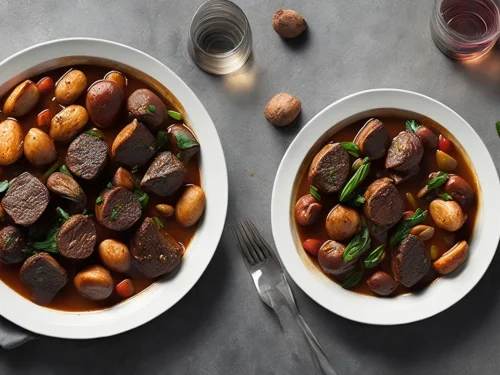
Braising rewards people who stop rushing
Some cuts fight back.
Chuck roast. Beef shank. Lamb shoulder. Pork shoulder.
They're packed with connective tissue, especially collagen. Cook them quickly and they feel tough. Cook them slowly—usually between 80°C and 95°C (175°F to 203°F) in the surrounding liquid—and collagen gradually converts into gelatin.
That's why a stew that seemed chewy after two hours suddenly becomes spoon-tender another hour later.
Braising follows a simple rhythm:
Brown the meat first.
Add aromatic vegetables and cooking liquid before slow, covered cooking.
Skip the browning step and the meal often tastes flatter than expected.
Poaching: Quiet heat, delicate results
Boiling is aggressive.
Poaching barely whispers.
The ideal poaching liquid generally stays around 70–82°C (160–180°F). Instead of rolling bubbles, you'll notice only occasional movement across the surface.
Fish fillets benefit enormously from this approach.
Eggs do too.
Restaurants often poach eggs using fresh eggs because tighter whites naturally hold together better. Some cooks add a small splash of vinegar to encourage proteins to coagulate more quickly, although perfectly fresh eggs usually need little help.
Steaming protects texture surprisingly well
Water reaches its boiling point at roughly 100°C (212°F) at sea level, though altitude changes that figure.
Steam transfers heat efficiently while limiting direct contact with water.
Broccoli keeps more structure.
Fish flakes gently.
Dumplings remain moist.
One common mistake? Lifting the lid repeatedly.
Every peek releases steam and interrupts cooking. It feels harmless until dinner takes ten minutes longer than expected.
Sous vide changed restaurant kitchens for a reason
Not because it's trendy.
Because it's predictable.
Sous vide—French for "under vacuum"—seals food inside heat-stable plastic pouches before cooking it in precisely controlled water baths using immersion circulators.
Modern consumer devices from companies like Anova, Joule (Breville), and Inkbird typically maintain water temperatures within roughly ±0.1°C, something standard ovens simply cannot match.
That precision matters.
Chicken breast cooked to 65°C (149°F) feels dramatically juicier than chicken accidentally pushed beyond 75°C (167°F).
Steaks can remain at target temperature for extended periods without rapidly overcooking because the water never exceeds the selected setting.
Still, sous vide isn't magic.
Food usually benefits from a quick finishing sear after leaving the bag. Otherwise, you'll get excellent texture but little surface flavor.
Food safety deserves attention
Precision cooking introduces one responsibility people occasionally overlook.
Vacuum-sealed environments create low-oxygen conditions. Temperature control becomes essential.
Professional guidance from organizations like the USDA and FDA Food Code emphasizes maintaining safe cooking temperatures and minimizing time spent within bacterial growth ranges, often cited between roughly 4°C and 60°C (40°F to 140°F).
Fortunately, reputable immersion circulators display continuous water temperatures, making consistent cooking much easier than improvised methods.
Knife skills quietly improve every recipe
Expensive knives aren't mandatory.
Sharp ones are.
Professional kitchens usually maintain edges with honing rods between sharpening sessions because honing realigns microscopic edge deformation rather than removing significant metal.
A few cuts appear everywhere:
Cut | Typical Size | Common Use |
|---|---|---|
Dice | Uniform cubes | Soups, sauces, stews |
Julienne | Thin matchsticks | Stir-fries, salads |
Chiffonade | Thin ribbons | Herbs, leafy greens |
Batonnet | Thick sticks | Fries, vegetable sides |
Uniform cuts aren't about appearance alone.
Equal-sized pieces cook at nearly the same speed, reducing undercooked centers and burnt edges.
Don't ignore resting time
The temptation is understandable.
Food smells incredible.
Everyone's hungry.
Cutting meat immediately after cooking, however, often sends juices flooding onto the cutting board instead of staying distributed throughout the muscle fibers.
General guidelines work well:
Small steaks: about 5 minutes
Large roasts: 15–30 minutes
Whole poultry: around 20–30 minutes
Those few extra minutes usually produce noticeably juicier slices.
Build techniques instead of collecting recipes
Many experienced cooks eventually notice something interesting.
They stop asking, "Which recipe should I follow?"
Instead, they ask:
"Should this ingredient be roasted, braised, grilled, steamed, or sautéed?"
That shift changes everything.
A refrigerator filled with random vegetables and one package of chicken suddenly becomes dozens of possible dinners instead of a problem waiting for grocery shopping.
Technique creates flexibility.
Recipes simply demonstrate it.
Frequently Asked Questions
Is sous vide worth buying for home cooking?
If you frequently cook steaks, chicken breasts, pork chops, or meal-prep proteins, an immersion circulator can produce remarkably consistent results. Casual cooks who rarely prepare those foods may find traditional roasting and pan cooking perfectly sufficient.
Why does food stick to stainless steel pans?
The pan is often either too cool or too hot. Properly preheated stainless steel allows proteins to naturally release once a browned crust develops. Trying to flip food too early usually causes sticking.
Which cooking technique is healthiest?
No single technique wins every time. Steaming, poaching, roasting, and sous vide generally require less added fat, while sautéing can also be very healthy when using moderate amounts of oil and fresh ingredients.
Can I sauté with butter?
Yes, although whole butter contains milk solids that brown quickly. Many cooks combine butter with a neutral oil or use clarified butter (ghee), which tolerates higher temperatures before smoking.
Do I need expensive cookware to master these techniques?
Not really. A heavy-bottomed skillet, a reliable chef's knife, a saucepan, and an oven-safe roasting pan cover most essential techniques. Skill consistently has a greater impact than premium equipment.
Keep practicing one technique at a time
Don't try mastering everything this week.
Cook onions until they're evenly browned without burning them. Roast vegetables until their edges caramelize. Learn exactly how your own stove reacts when you lower the heat. Borrow or buy an immersion circulator later if precision cooking interests you.
Those small repetitions add up faster than another stack of saved recipes ever will.
cooking techniques
sauté cooking
sous vide cooking
kitchen skills
cooking methods
home cooking tips
chef techniques
beginner cooking guide
culinary basics
essential cooking skills
Found this helpful? Share it!